


The Miami Cuban Link: A Buyer's Guide from 47th Street
The Cuban link is the most recognizable chain in the world right now, and the most misunderstood at the counter. Here is what you're actually looking at, and what to check before you pay for one — the same things we check when we buy.
What makes it a Miami Cuban
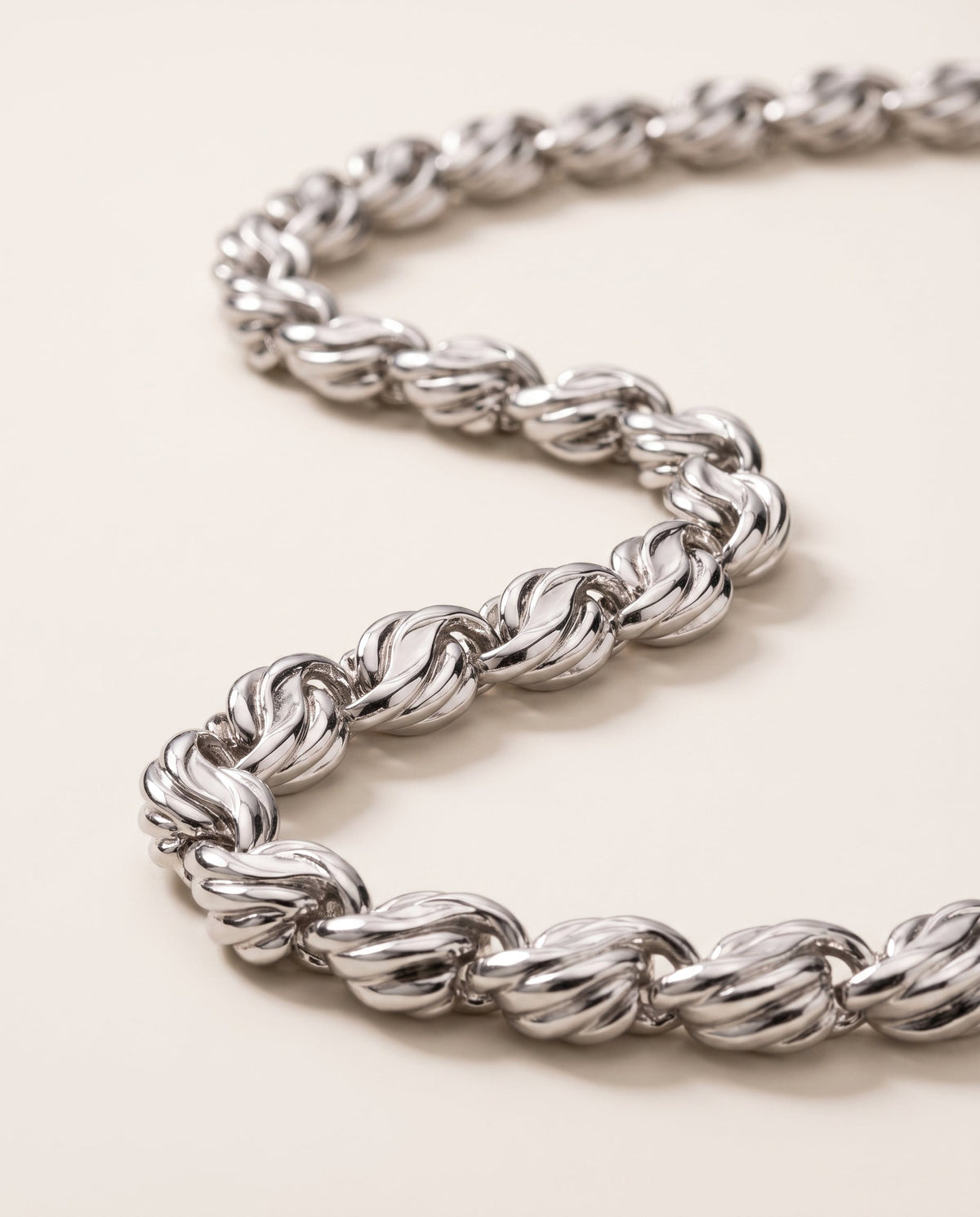
Every Cuban is a curb chain: links that interlock and lie flat against the body. The Miami Cuban is the heavyweight version — links thicker and more rounded, packed so tightly the chain reads as one continuous rope of gold rather than a series of links. Put an ordinary curb chain and a Miami Cuban side by side and the difference is immediate: one is a chain, the other is a presence.
Solid versus hollow — the decision that matters most
Two chains can look identical in a photo and be entirely different objects.
Solid gold is gold all the way through. It carries real weight — you feel it when you move — and it takes a lifetime of daily wear. When a link eventually wears, any competent bench can repair it.
Hollow (and semi-hollow) chains are built around an empty core to hit a lower price at the same visual size. The trade-off is structural, and it's permanent: a hollow link that dents stays dented, and repairing hollow gold is somewhere between difficult and impossible — there's nothing behind the wall for a jeweler to work with. A hollow chain is not a scam; it's a different product. It just has to be priced like one, and disclosed as one.
The test is a scale. Gold is sold by weight. Ask for the gram weight before you ask for the price — a 24-inch, 10mm chain weighing 60 grams and one weighing 180 grams are not competing products, whatever the photos suggest.
The numbers that set the price
- Gram weight. The single biggest factor. Metal is priced by weight against the market, plus labor.
- Purity. 10k, 14k, 18k — stamped on the clasp or the last link. More gold per gram costs more; 14k is the workhorse for daily wear, harder than 18k and richer than 10k.
- Width. Measured in millimeters. 3–5mm sits under a collar and reads as detail; 6–9mm is unmistakably a Cuban; 10mm and up is a statement that arrives before you do.
- Length. Most men wear 20–24 inches. Shorter sits at the collarbone; longer drops to the chest. Try lengths on — an inch changes the whole read.
- The clasp. A heavy chain needs a real closure. Box clasps with safety latches are standard on serious pieces; a light spring ring on a heavy chain is a chain waiting to be found on a sidewalk.
If it's iced
Diamond-set Cubans follow the same rules plus one: origin. Lab-grown and natural stones look identical set in a link and are priced very differently. The listing — or the dealer across the counter — should state which you're buying without being asked twice. Ours state it on every listing, in the title or the first line.
The short version
Ask three questions: solid or hollow, how many grams, what purity. A seller who answers all three plainly is selling you gold. A seller who answers with adjectives is selling you a photograph.
Our chains are at 76 W 47th Street and in the chains collection, gram weights listed. Mazalito.